Hepatology and GI
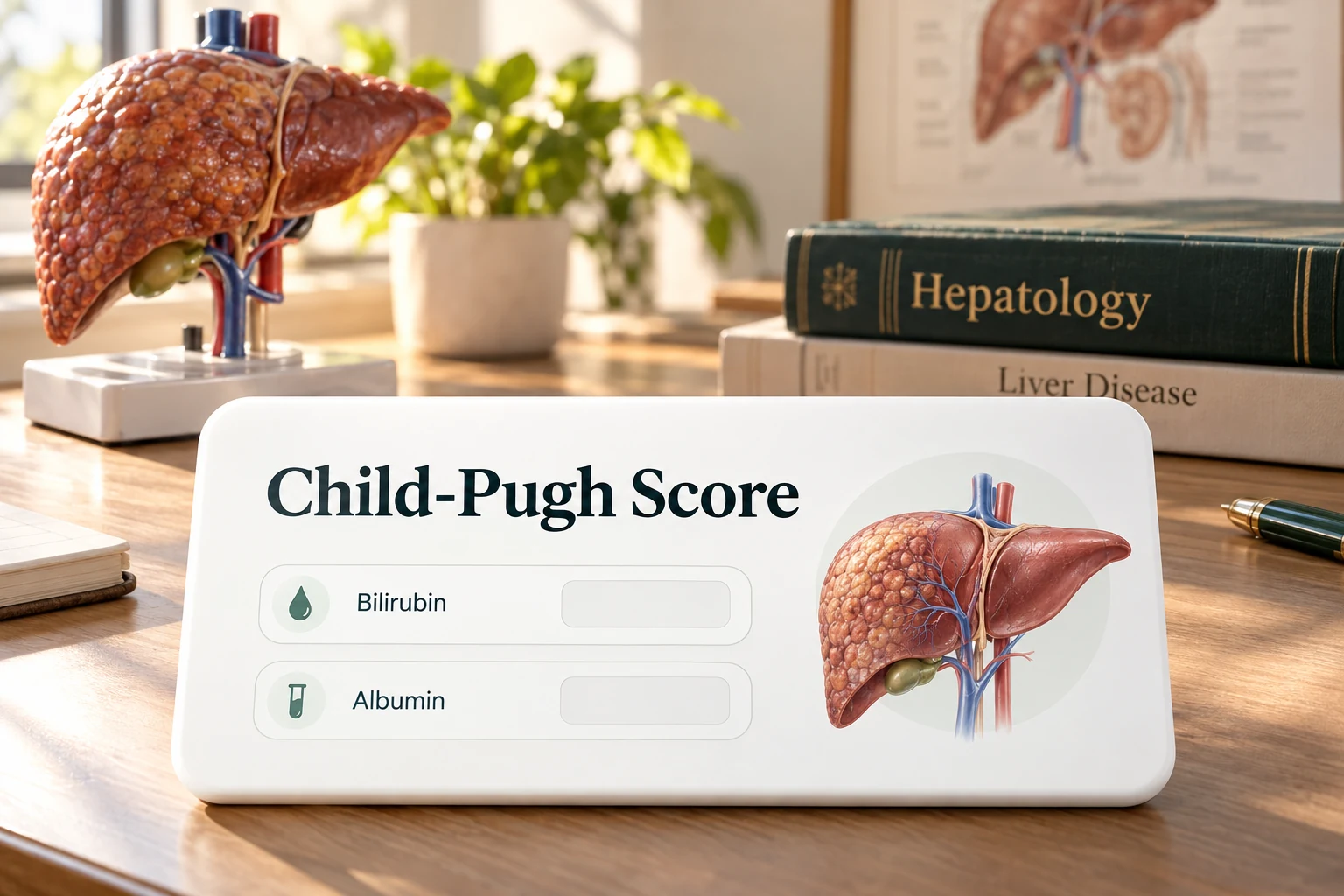
Child-Pugh Score for Cirrhosis
Assess severity and prognosis of liver cirrhosis.
Child-Pugh Score calculator
Result
Class A (5)
Survival: 1-yr ~95%, 2-yr ~90%
How to use it
- 1
5 domains. Bilirubin, albumin, INR, ascites, encephalopathy — each scored 1–3.
- 2
Class A (5–6). Good function. Class B (7–9): moderate. Class C (10–15): poor.
- 3
Use PBC bilirubin ranges. For primary biliary cholangitis, different bilirubin thresholds apply.
When to use it
Use in patients with known or suspected liver cirrhosis for staging, prognosis, surgical risk assessment, and guiding management decisions. Class C cirrhosis typically warrants transplant evaluation.
- Surgical risk in cirrhosis
- Child-Pugh A: mortality ~10%. B: ~30%. C: ~80% for major abdominal surgery.
- Drug dosing
- Many hepatically-metabolised drugs: half-dose in Child-Pugh B; avoid in C.
- Screening for HCC
- Child-Pugh A/B: 6-monthly USS + AFP. Child-Pugh C not transplant-listed: limited benefit.
About the score
The Child-Pugh score (originally the Child-Turcotte-Pugh score) is a widely used clinical grading system for the severity of chronic liver disease and cirrhosis. It combines five variables — serum bilirubin, serum albumin, prothrombin time/INR, ascites severity, and hepatic encephalopathy grade — to classify patients into three categories: Class A (well-compensated), Class B (significant functional compromise), and Class C (decompensated cirrhosis). Despite being partially superseded by MELD for transplant prioritisation, Child-Pugh remains valuable for assessing surgical risk, prognosis in non-transplant settings, and as a simple bedside classification system.
Scoring criteria
- Bilirubin (µmol/L)<34=1, 34–50=2, >50=3
- 1–3
- Albumin (g/L)>35=1, 28–35=2, <28=3
- 1–3
- Prothrombin time (seconds prolonged) or INR<4s / INR<1.7=1; 4–6s / 1.7–2.3=2; >6s / >2.3=3
- 1–3
- AscitesNone=1, Mild (controlled)=2, Moderate–severe (refractory)=3
- 1–3
- Hepatic encephalopathy (grade)None=1, Grade I–II=2, Grade III–IV=3
- 1–3
Score interpretation
- 5–6 (Class A)Well-compensated cirrhosis1-year survival ~100%; 2-year ~85%; standard surgical risk
- 7–9 (Class B)Significant impairment1-year survival ~80%; 2-year ~60%; high surgical risk
- 10–15 (Class C)Decompensated cirrhosis1-year survival ~45%; 2-year ~35%; transplant evaluation warranted
Guideline recommendation
EASL Clinical Practice Guidelines on Decompensated Cirrhosis (2018): Child-Pugh Class C cirrhosis indicates decompensated disease with poor prognosis and warrants referral for transplant evaluation. Child-Pugh is also the standard tool for assessing operative risk in cirrhotic patients requiring surgery.
Clinical pearls
- Child-Pugh Class C (score 10–15) with no contraindications to transplantation should prompt urgent hepatology referral.
- Ascites and encephalopathy components are subjective — ensure consistent assessment within the clinical team.
- Patients with Child-Pugh B/C undergoing elective surgery carry 30-day mortality risks of 30% and 80% respectively; avoid elective surgery in Class C.
- MELD score is preferred for transplant waitlist prioritisation; Child-Pugh remains useful for surgical risk assessment and simple staging.
Limitations
- Two subjective components (ascites, encephalopathy) reduce reproducibility between observers.
- Less accurate than MELD for predicting short-term mortality in acute settings.
- Does not incorporate renal function, which independently predicts outcomes in cirrhosis.
A reference for clinicians and students, not medical advice. A score supports a decision; it does not make one. Check every result against the patient in front of you and your local protocol.
At a glance
- Specialty
- Hepatology and GI
- Inputs
- 5
- Type
- Points score
- Guidelines from
- EASL, AASLD
Frequently asked questions
What is Child-Pugh Class C?
Child-Pugh Class C (score 10–15) represents decompensated cirrhosis with an estimated 1-year survival of approximately 45% and 2-year survival of 35% without liver transplantation. It indicates significant hepatic decompensation and typically warrants transplant evaluation.
What is the difference between Child-Pugh and MELD score?
Child-Pugh uses five variables (three laboratory values: bilirubin, albumin and INR; two clinical assessments: ascites and encephalopathy) and classifies patients into classes A, B, C. MELD uses three purely objective laboratory values (INR, bilirubin, creatinine) and generates a continuous numeric score. MELD is now preferred for transplant prioritisation due to better predictive accuracy and reproducibility, but Child-Pugh is still widely used for surgical risk stratification and simple clinical staging.
More in hepatology and GI
- MELD-Na ScoreHepatology and GI · 4 inputs
- SOFA ScoreCritical care · 6 inputs
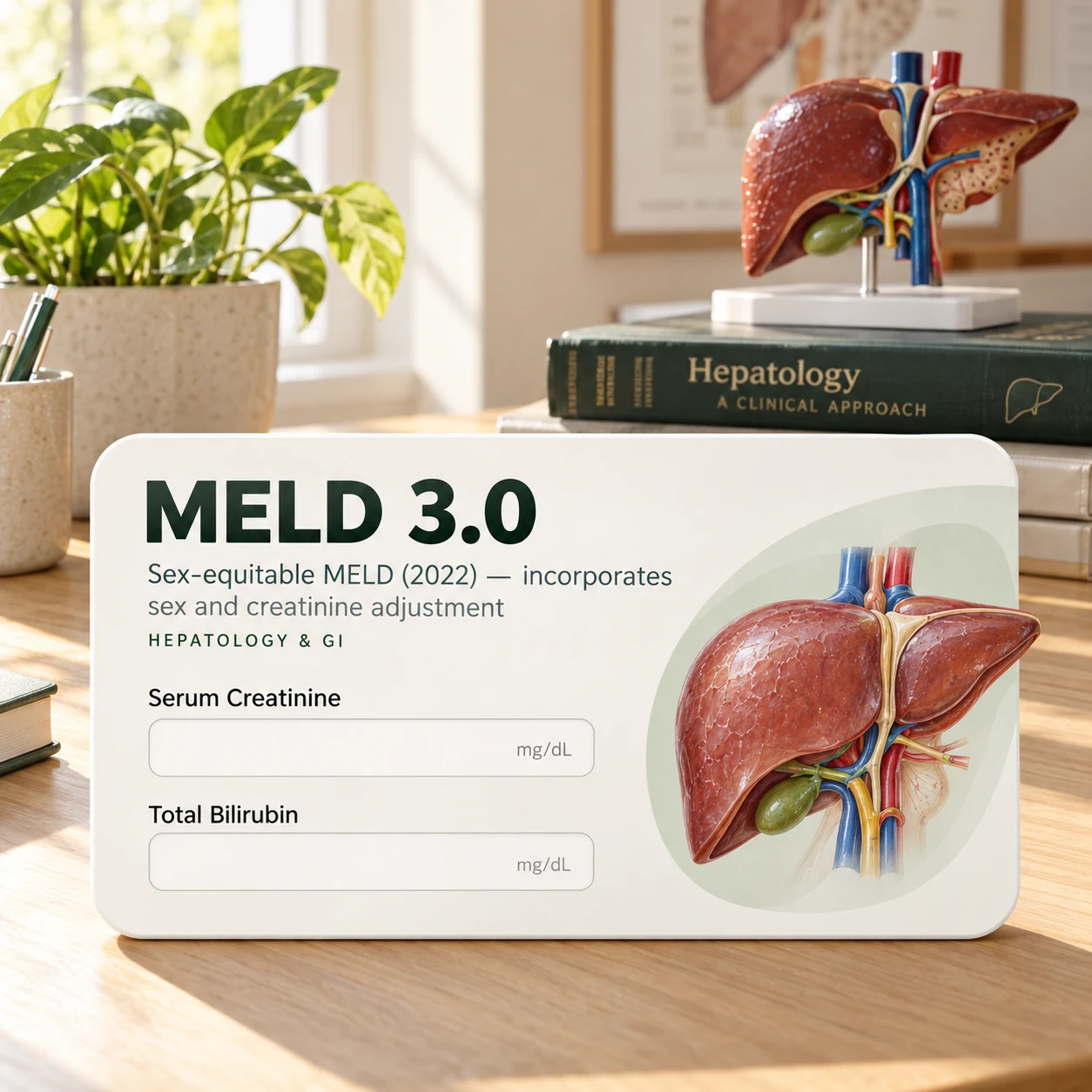
- MELD 3.0Hepatology and GI · 5 inputs
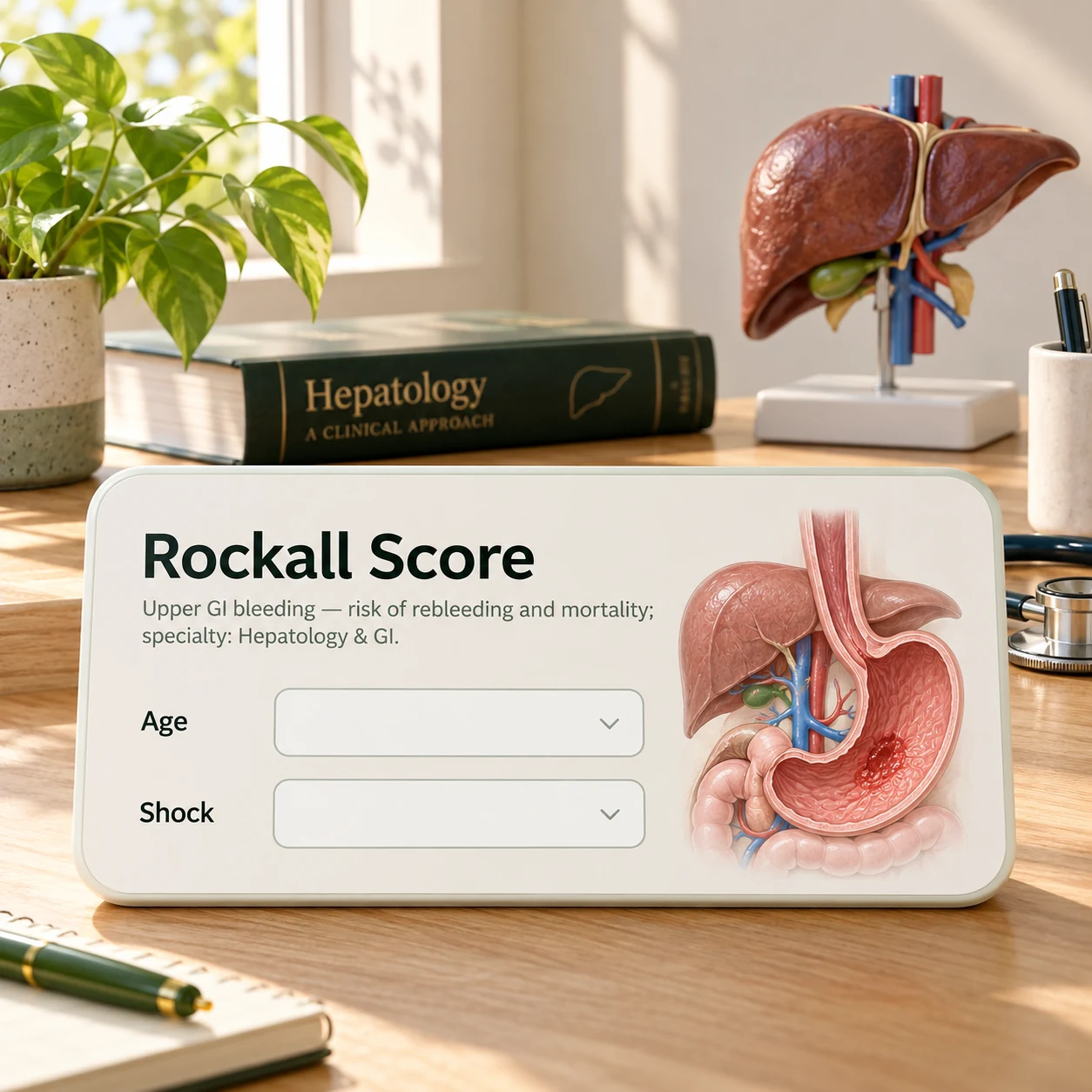
- Rockall ScoreHepatology and GI · 5 inputs
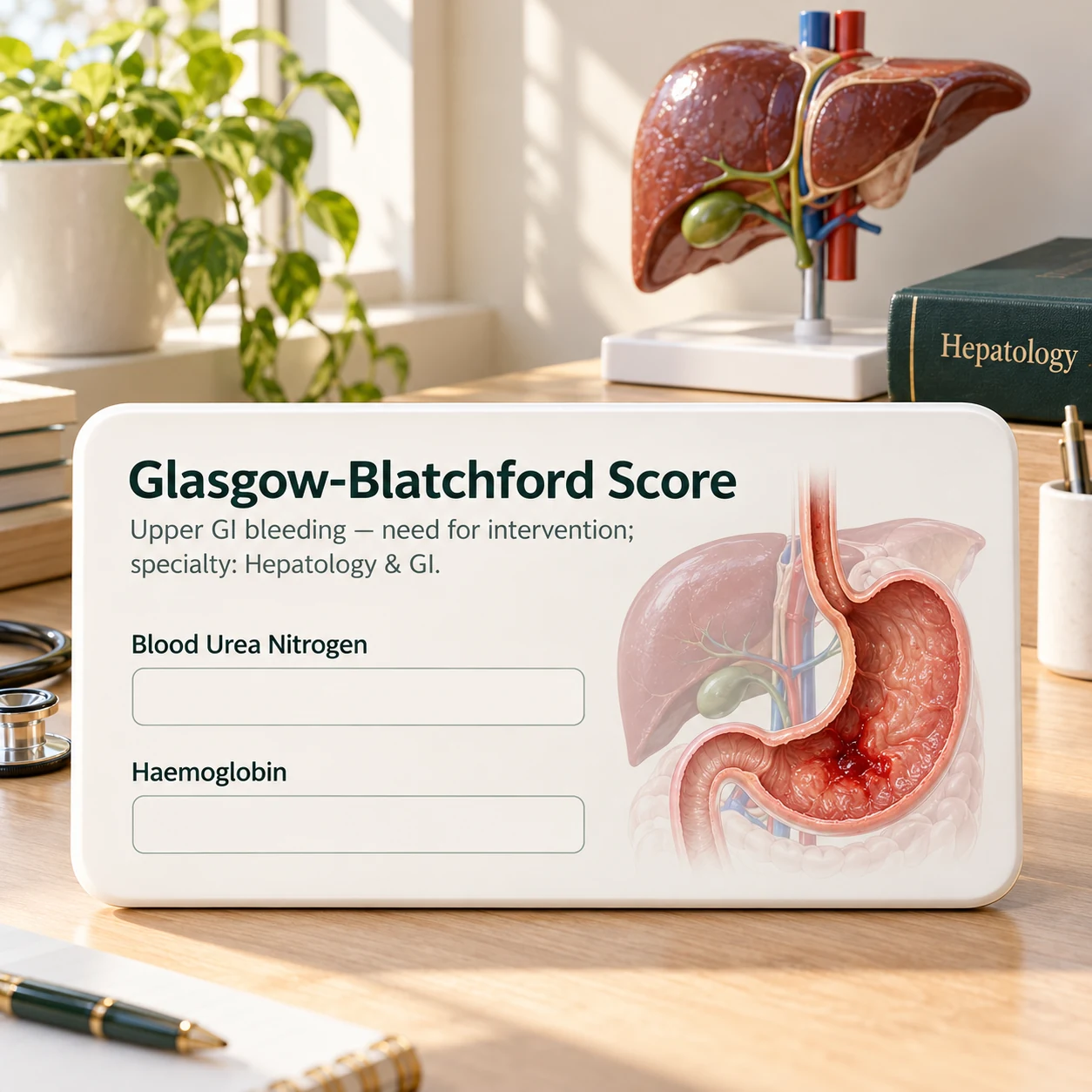
- Glasgow-Blatchford ScoreHepatology and GI · 9 inputs
- Ranson's CriteriaHepatology and GI · 11 inputs
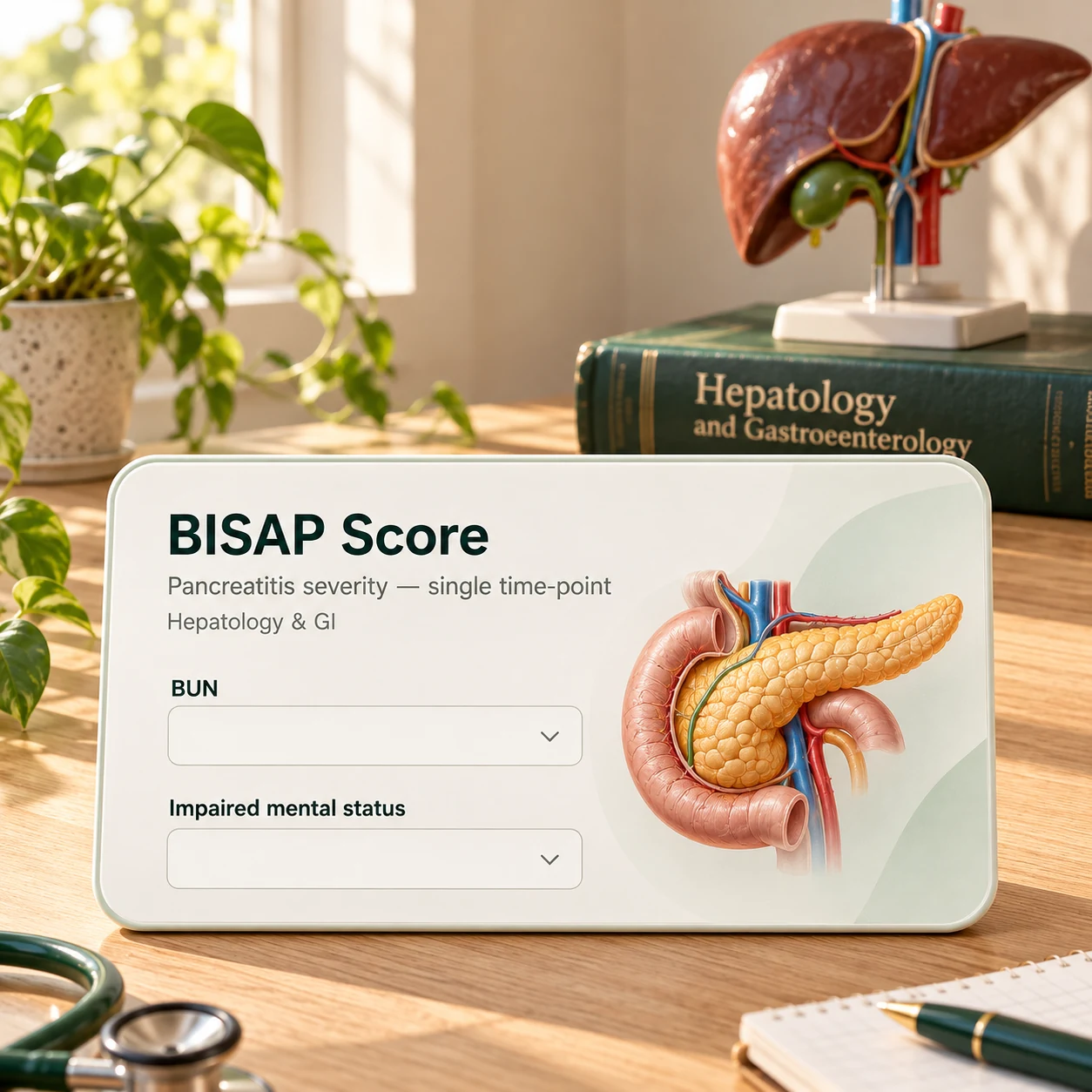
- BISAP ScoreHepatology and GI · 5 inputs
- FIB-4 IndexHepatology and GI · 4 inputs