Cellular and molecular gastroenterology and hepatology
Guiding Principles: Current Practices and Considerations for Benchmarking Human Gastrointestinal Organoids
Contenu en anglais
Cellular and molecular gastroenterology and hepatology
Contenu en anglais
Osler répond à partir de cette bibliothèque et cite la recommandation derrière chaque affirmation.
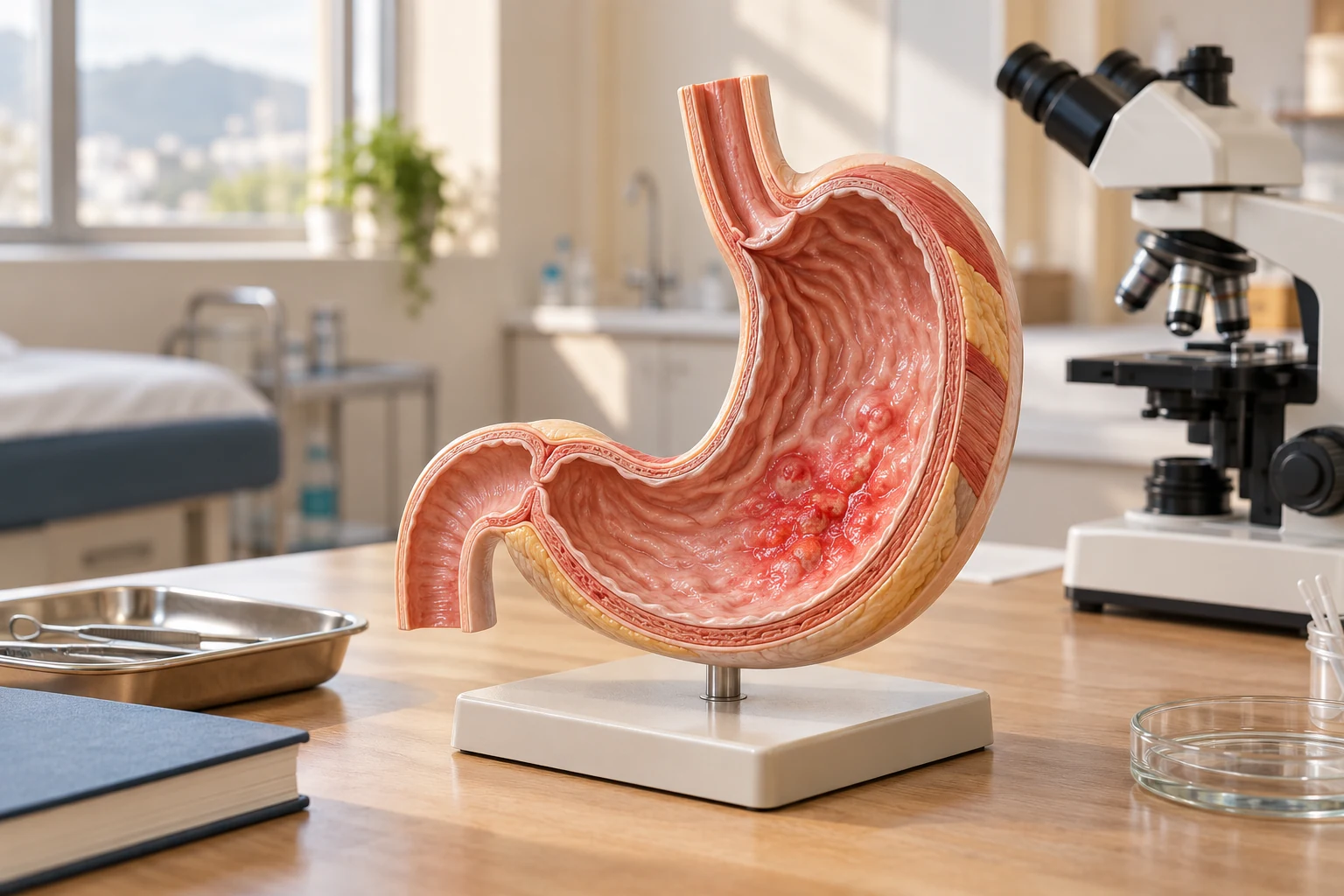
Since the first reports of organoids cultured from primary human small intestine and colonic epithelium in 2011, these systems have held considerable potential to accelerate our understanding of gastrointestinal biology and disease. Improvements in tissue isolation and culture conditions for primary tissue organoids, as well as the parallel development of protocols for generating organoids from pluripotent cells, have made organoid research increasingly accessible over the last 15 years. As organoids emerge as bona fide model systems, there is a growing need to understand and evaluate the accuracy and limitations of their ability to represent different aspects of gastrointestinal biology, both within and across laboratories and experimental contexts. In this Guiding Principles commentary, we outline the current state of the field and challenges for benchmarking human small intestinal and colonic organoids against native gastrointestinal tract biology. We outline a conceptual framework for approaching organoid benchmarking at multiple scales, review current approaches and efforts in assaying similarities between organoids and their source tissues, and discuss the "next frontiers" for validating organoids as reproducible and high-fidelity models of the human gastrointestinal tract.
Publiée par Cellular and molecular gastroenterology and hepatology, 2026. Le PDF est présenté tel que publié et reste l’œuvre de ses auteurs et de son éditeur ; l’original se trouve à la source indiquée ici. Les ayants droit peuvent nous demander de retirer un fichier à l’adresse info@prognia.nl.
Prognia résume cette recommandation à des fins de consultation et d’enseignement. Il ne s’agit pas d’un avis médical. Vérifiez toujours la recommandation officielle et les protocoles locaux en vigueur avant de l’appliquer.