Department of Veterans Affairs and Department of Defense
Rehabilitation of Lower Limb Amputation
Diese Leitlinie umfasst 26 Empfehlungen, 201 Literaturangaben, 15 Tabellen und 1 Abbildung.
Inhalt auf Englisch
Zusammenfassung
This clinical practice guideline provides an evidence-based framework for evaluating and managing care for adult patients who have experienced lower limb amputation. It emphasizes a patient-centered, multidisciplinary approach to optimize functional independence, health outcomes, and quality of life.
Kernaussagen
Engage a multidisciplinary amputation care team (ACT).
Provide post-operative amputation care in an inpatient rehabilitation facility over other settings.
Prescribe microprocessor knee units over non-microprocessor knee units for prosthetic ambulators.
Provide routine behavioral health and psychosocial assessments.
Use rigid or semi-rigid residual limb dressings post-transtibial amputation to promote healing.
Offer peer support by a trained peer as a component of rehabilitation.
Use patient-reported and performance-based measures to assess function.
Was ist neu in dieser Version
Added 12 new recommendations, reviewed and replaced 4 recommendations, reviewed and amended 3 recommendations, carried over 1 recommendation not changed, and carried over 4 recommendations amended from the 2017 VA/DOD LLA CPG. The methodology was updated to reflect a more rigorous application of the GRADE framework.
Empfehlungen
IX. Recommendations
There is insufficient evidence to recommend one surgical amputation procedure over another.
Patientengruppe: Adult patients considered for lower limb amputationWenn: Lower limb amputation
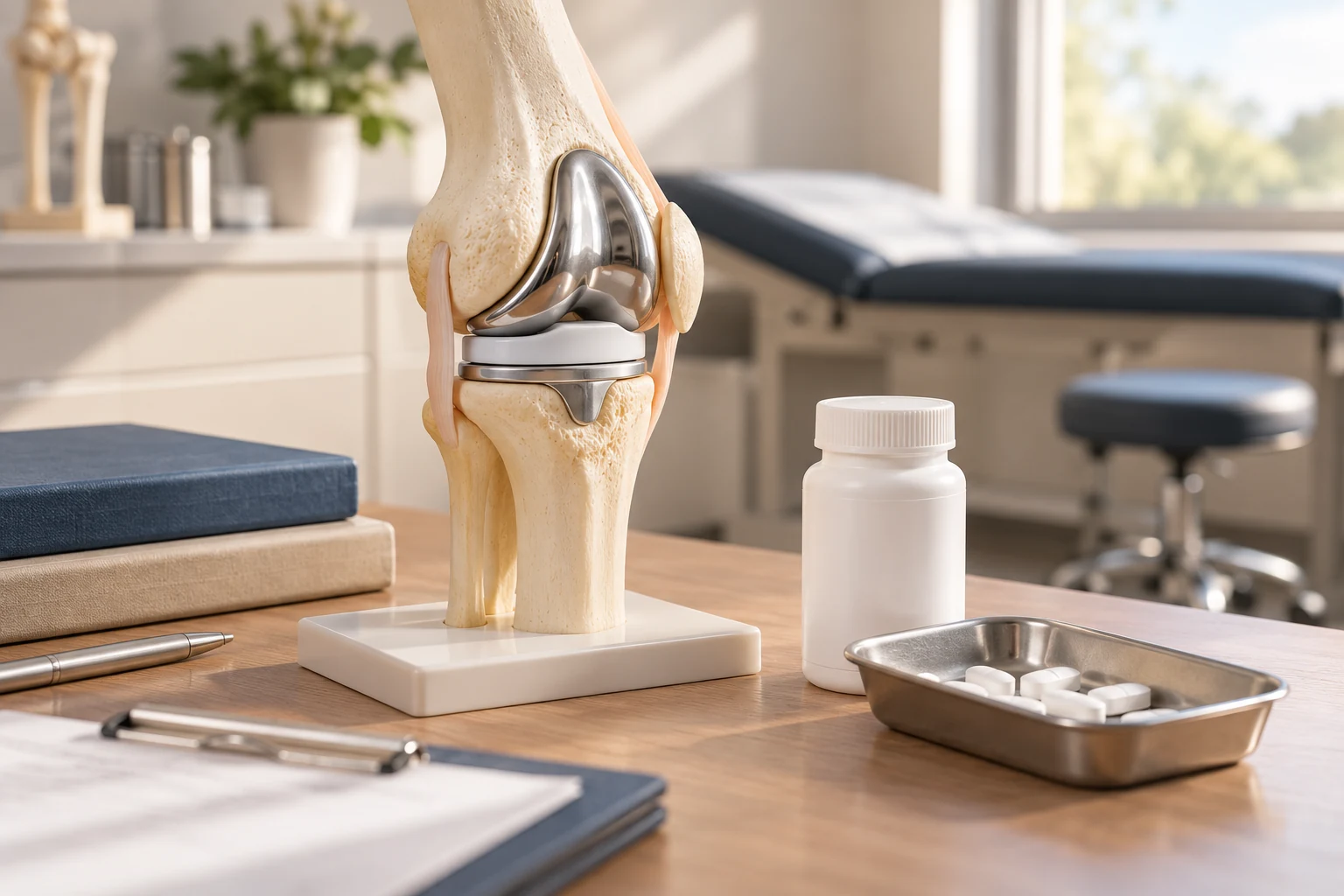
For patients with transfemoral amputation who meet eligibility criteria, we suggest osseointegration as an option to improve prosthesis use.
Patientengruppe: Patients with transfemoral amputationWenn: Lower limb amputation
There is insufficient evidence to recommend for or against targeted muscle reinnervation or other peripheral nerve surgical management for phantom limb pain.
Patientengruppe: Patients undergoing lower limb amputationWenn: Phantom limb pain
We suggest intraoperative placement of a perineural catheter for the post-operative delivery of local anesthetic to reduce pain following amputation surgery.
Patientengruppe: Patients undergoing lower limb amputationWenn: Post-operative pain
Post-transtibial amputation, we suggest application of a rigid or semi-rigid residual limb dressing to promote healing and early prosthesis use as soon as feasible.
Patientengruppe: Patients post-transtibial amputationWenn: Post-operative residual limb healing
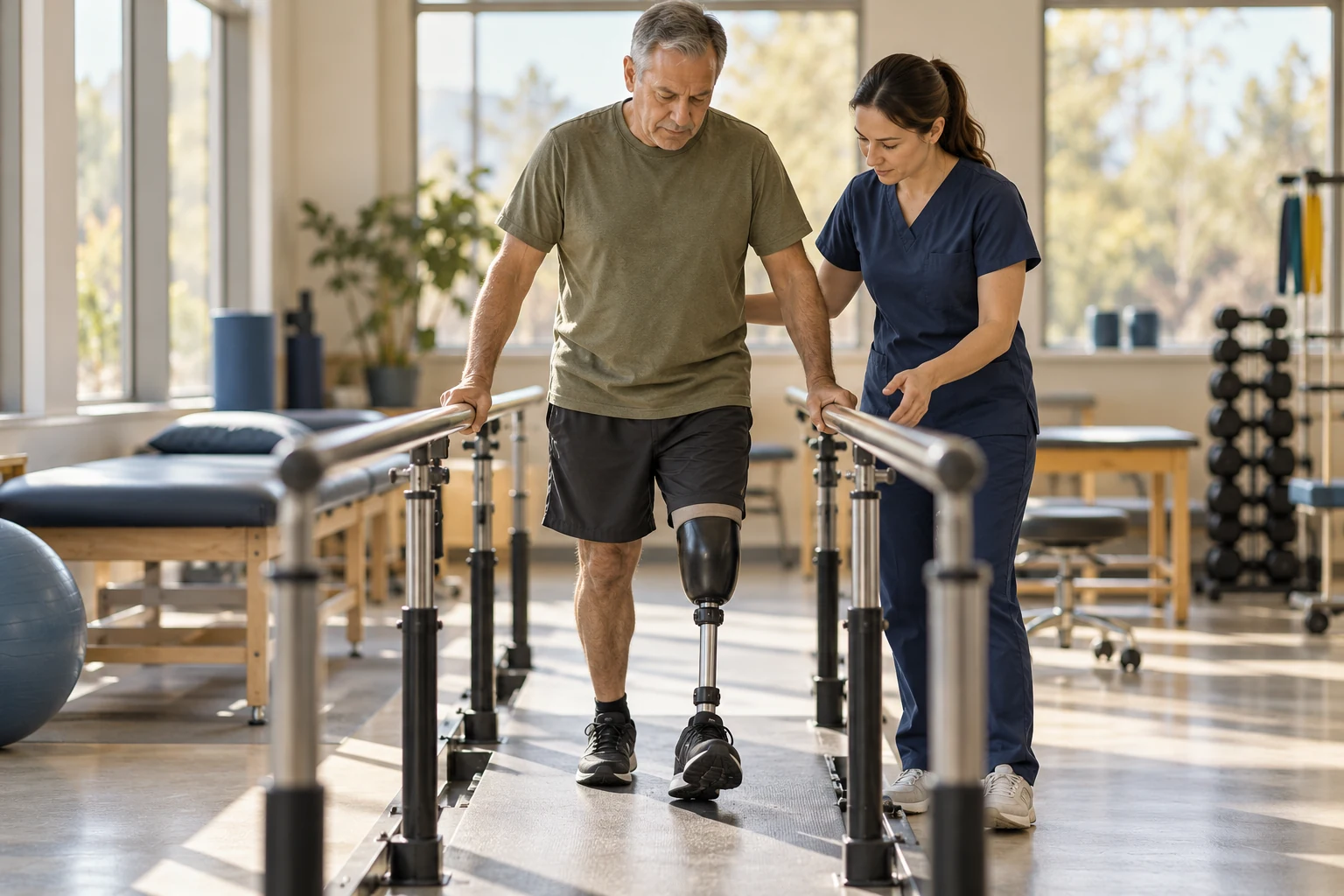
We suggest providing post-operative amputation care in an inpatient rehabilitation facility (IRF) over other settings (e.g., skilled nursing facility (SNF) or home care).
Patientengruppe: Patients post-lower limb amputationWenn: Post-operative rehabilitation
We suggest assessment and treatment to improve behavioral health and psychosocial functioning.
Patientengruppe: Patients with lower limb amputationWenn: Psychosocial and behavioral health
We suggest peer support by a trained peer as a component of rehabilitation to improve psychosocial function.
Patientengruppe: Patients with lower limb amputationWenn: Psychosocial functioning